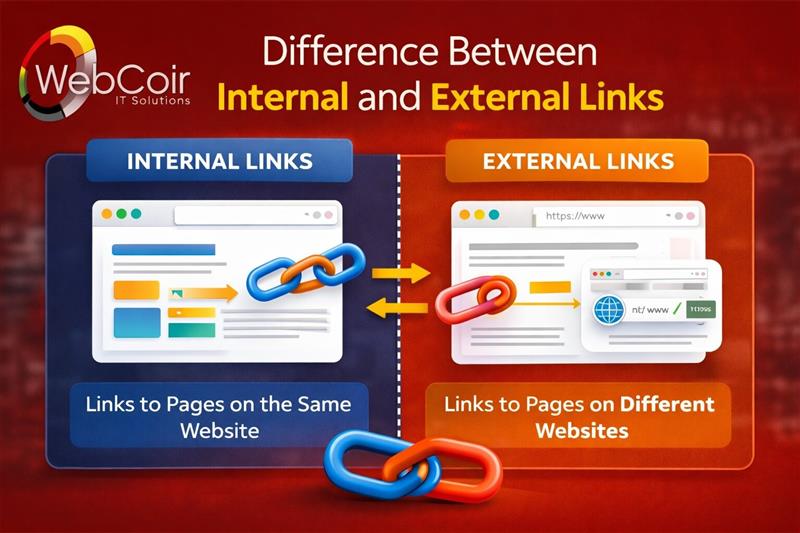
The Difference Between Internal and External Links: A Comprehensive Guide
In the world of digital marketing and SEO, links play a crucial role in how websites are ranked and how users navigate through content. Two key types of links that you’ll often hear about are internal links and external links. Although they both serve the purpose of connecting one webpage to another, they have distinct roles and benefits in the realm of SEO and user experience.
If you’re looking to improve your website’s SEO and user experience, understanding the difference between internal and external links is vital. In this blog, we’ll explore these two types of links, their significance in digital marketing, and how Webcoir IT Solutions can help enhance your website’s performance through effective link-building strategies.
- What Are Internal Links?
Internal links are links that connect one page of your website to another within the same domain. These are links that lead users to other pages or sections on your site, whether it’s from the homepage, a blog post, a product page, or a contact form.
For example, linking from a blog post about SEO to another article about digital marketing strategy is an internal link.
Benefits of Internal Links:
- Improved Site Navigation: Internal links make it easier for users to explore your website and find related content, improving the overall user experience.
- SEO Optimization: Search engines use internal links to crawl and index pages on your site. A well-structured internal linking system ensures that all your important pages are accessible.
- Increased Page Authority: Linking to other relevant content within your website helps distribute page authority across your site, improving the ranking potential of linked pages.
- What Are External Links?
External links are links that connect one page on your website to a page on a different domain. These links direct users to resources, content, or services outside of your website.
For example, if you link to a well-known blog post on Google’s official website or reference a third-party study in your content, that’s an external link.
Benefits of External Links:
- Builds Credibility and Authority: Linking to reputable external sources helps improve the credibility and authority of your content. It signals to both users and search engines that you are referencing high-quality resources.
- Boosts SEO through Backlinking: When other websites link to your website (known as backlinks), they help improve your website’s domain authority and ranking on search engine results pages (SERPs).
- Improves User Experience: By providing external links to relevant, authoritative resources, you enhance the value of your content and offer additional value to your readers.
- The SEO Impact: How Do Internal and External Links Affect Rankings?
Both internal and external links have significant SEO implications, but they affect rankings in different ways.
- Internal Links for SEO: Search engines use internal links to crawl your website and understand its structure. A well-organized internal linking strategy helps search engines discover new pages, which can lead to better rankings. Additionally, internal links help spread “link juice” (or ranking power) across your website. By linking to important pages, you help them rank higher in search results.
- External Links for SEO: External links play a crucial role in off-page SEO. When a high-authority site links back to your website, it boosts your domain’s authority and trustworthiness. The more quality external links (or backlinks) you have, the better your site is likely to rank. However, too many low-quality external links or irrelevant external links can hurt your SEO, so it’s important to focus on quality over quantity.
- The Role of User Experience: Internal vs. External Links
While both internal and external links help with SEO, they also play different roles in enhancing user experience on your website.
- Internal Links for Navigation and Engagement: Internal links keep users on your site longer by guiding them to related content. By using relevant internal links, you can keep visitors engaged and increase the chances of them exploring more pages. For example, linking to related product pages or blog posts keeps the user journey within your site.
- External Links for Added Value and Resources: External links provide value by directing users to authoritative resources, studies, or data that support your content. It’s essential to ensure that the external links you use are reliable, as broken or irrelevant links can diminish the user experience.
By balancing both internal and external links, you can create an enriching user experience that encourages exploration and engagement while enhancing the perceived authority of your content.
- Best Practices for Using Internal and External Links
Now that we understand the key differences and benefits, let’s explore some best practices for utilizing internal and external links effectively:
- Internal Links:
- Use descriptive anchor text that accurately reflects the linked page’s content.
- Ensure your internal linking structure is logical and easy to follow.
- Regularly update internal links when new content is added to your website.
- Don’t overstuff internal links. Use them naturally and contextually within your content.
- External Links:
- Link only to high-authority and relevant external sources.
- Avoid using too many external links on a single page. Quality matters more than quantity.
- Ensure external links open in a new tab to keep users on your website.
- Monitor your external links regularly to ensure they are working and not broken.
Key Differences Between Internal and External Links
Here’s a quick comparison table to help you understand the key differences between internal and external links at a glance:
| Aspect | Internal Links | External Links |
| Definition | Links that connect pages within the same website. | Links that connect your website to other domains. |
| Purpose | Help users navigate within the site and distribute link authority. | Direct users to external resources or reference authoritative content. |
| SEO Impact | Helps search engines crawl your website, spreads link juice across pages. | Helps increase domain authority through backlinks from reputable sources. |
| User Experience | Enhances website navigation and user engagement. | Provides additional value and resources from third-party websites. |
| Authority Building | Improves on-site authority by linking to other internal pages. | Builds external credibility and trust with high-quality, authoritative sites. |
| Impact on Ranking | Improves internal page rankings by structuring content and linking logically. | Boosts your site’s ranking by acquiring backlinks from credible websites. |
| Link Control | Fully controlled by the website owner. | Less control; depends on other websites linking to you. |
| Anchor Text | Usually relevant to content within your site. | Should reference authoritative and relevant external content. |
| Best Use Case | Ideal for keeping users on your site and improving site architecture. | Ideal for citing sources, building relationships, and referencing authoritative content. |
Why Choose Webcoir IT Solutions for Your Digital Marketing Needs in India?
As you continue to develop and optimize your website’s internal and external linking strategy, it’s crucial to have a team of experts by your side. Webcoir IT Solutions offers comprehensive digital marketing services in India, specializing in SEO, content marketing, and link-building strategies that drive results.
Our team can help you implement the best internal linking structure to improve site navigation and crawlability. Additionally, we can assist you in obtaining high-quality external backlinks that will boost your website’s credibility and SEO performance. With a solid link-building strategy in place, your website will be well-equipped to climb the ranks in search engines and deliver an exceptional user experience.
Contact us today to learn how our digital marketing services can help elevate your online presence