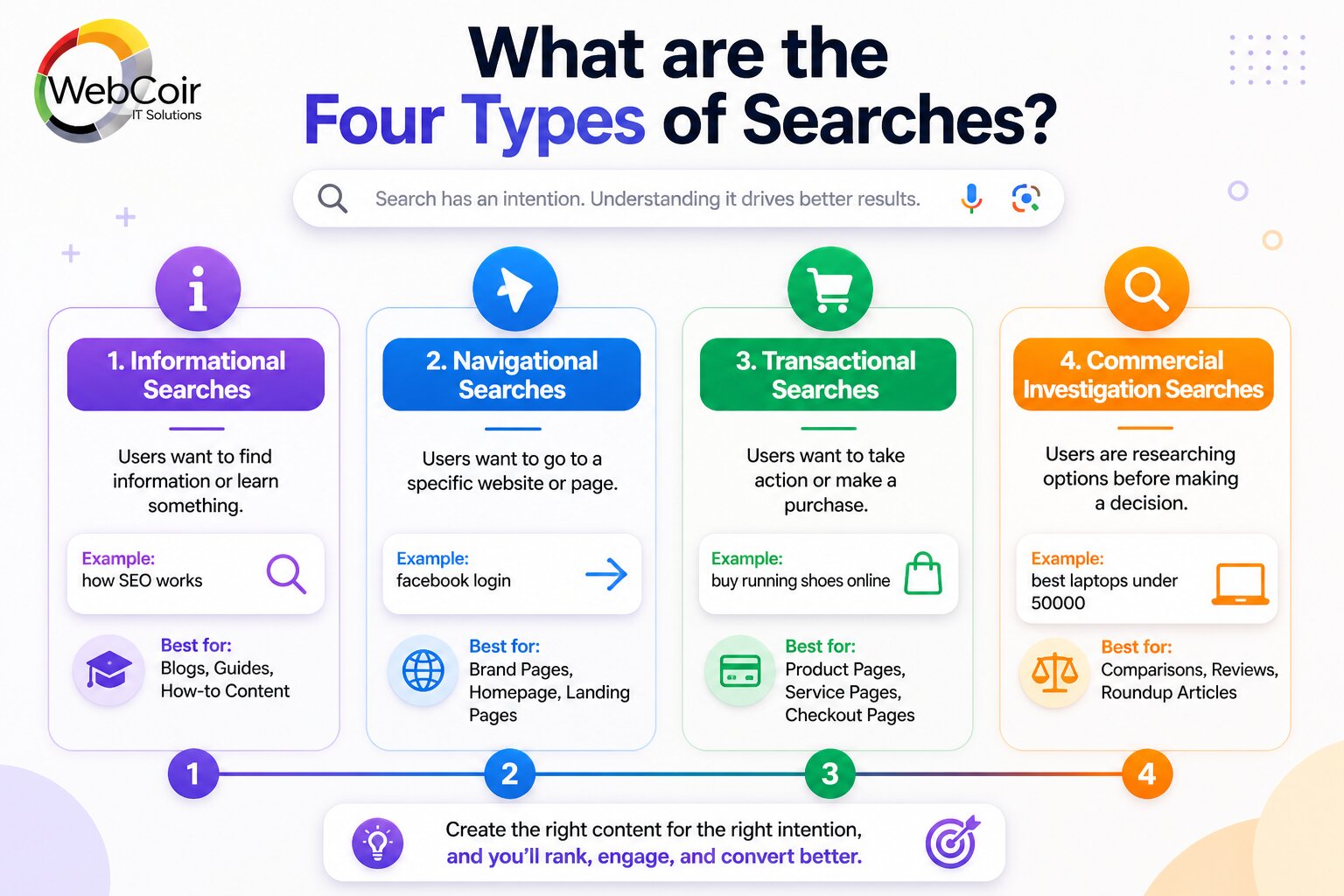
What are the Four Types of Searches?
Search queries on the internet can generally be categorized into four main types, each reflecting a different user intent. Understanding these search types is crucial for search engines, marketers, and businesses as it helps tailor content to meet users’ needs. The four types of searches are:
- Navigational Search
- Informational Search
- Transactional Search
- Commercial Investigation
1. Navigational Search
Navigational searches occur when a user is looking for a specific website or webpage. The intent behind these searches is clear: the user wants to go directly to a particular destination on the internet. For example, if someone types “Facebook login” or “YouTube,” they are searching for a particular site or service. These queries are often brand or platform-specific and aim to get the user where they need to be quickly.
2. Informational Search
Informational searches are made when users are seeking answers or general information about a topic. They are not looking to make a purchase but rather to educate themselves or find solutions to questions. An example might be “how to change a tire” or “what is quantum physics?” These searches typically lead to blog posts, how-to guides, articles, or informational videos that provide relevant details.
3. Transactional Search
Transactional searches are conducted when the user is looking to take a specific action, most commonly a purchase. The user’s intent is to engage in a transaction, whether it’s buying a product, booking a service, or signing up for something. For example, “buy iPhone 13” or “book a flight to New York” are transactional searches. These types of searches usually bring users to e-commerce sites or booking platforms where they can complete their desired actions.
4. Commercial Investigation
Commercial investigation searches occur when users are in the process of researching products or services before making a purchase. They are actively comparing options but are not quite ready to buy. For example, a user might search for “best budget smartphones” or “compare electric cars.” These searches are driven by the intent to find the right option, often leading to product reviews, comparison sites, and detailed analyses.
Why Understanding Search Intent Matters
The type of search a user conducts can help marketers, businesses, and search engines deliver the most relevant content. By understanding the user’s search intent—whether they are navigating to a specific site, looking for information, ready to make a transaction, or comparing options companies can tailor their strategies to better meet the needs of the audience and improve user experience.
In conclusion, the four types of searches navigational, informational, transactional, and commercial investigation—help classify user intent and guide the content provided in search engine results. Recognizing these different search types can lead to more effective digital marketing and content strategies.